Outside of my book, I have had opportunities to use my skills as a historian to write for a variety of readers, including the scholarly audiences addressed by my three peer-reviewed journal articles.
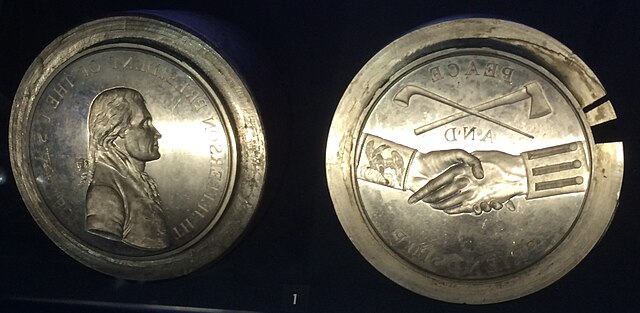
My most recent article, “Creating the ‘Great American Father’: Indigenous Sovereignty, Republican Monarchy, and the International Consequences of the American Revolution,” appeared in the June 2026 issue of Diplomatic History, as part of a forum marking the 250th anniversary of US independence entitled Diplomatic Worlds of the American Revolution. This article brings together—and thus advances—new historiographies that recognize Indian affairs as foreign relations, and the early presidency as a hybrid, republican-monarchical office by arguing that the practices the early United States used to conduct diplomacy with Indigenous nations were as monarchical as they were republican. The United States’ adaptation of important aspects of monarchy in its interactions with Native polities drew upon centuries of pre-revolutionary Indigenous-imperial interactions. The monarchical practices that early US officials employed in diplomacy with Native leaders manifested in three key forms: 1) direct communication, both written and in-person, between Indigenous diplomats and US presidents; 2) gifts to Native leaders of medals imprinted with the then-contemporary president’s face; and 3) the exertions of the diplomats known as federal Indian agents to act in the Great Father’s name. This article is available free online through November 2026; after that, I would be happy to distribute a copy to those lacking institutional access.
Previously, I published the essay “A House with Exposed Beams: Inquiry-Based Learning and Historians’ Ethical Responsibilities as Scholar-Teachers” in a December 2024 special issue of History and Theory entitled History and Ethics. I argue that the teaching of history can be seen as a meaningful form of historical scholarship and poses some of the same methodological, theoretical, and ethical questions as historical research, albeit usually generating quite different answers to the queries. I delve into three sets of tensions that are of significance to historians in our roles as researchers and as teachers and must be brought into a certain kind of balance in each case: authority vs. humility, narrative vs. analysis, and historicist particularity vs. human universalism. I discuss each set of tensions with reference to such thinkers as Paulo Freire, bell hooks, and Friedrich Nietzsche. In each case, I also draw on my own experience in the classroom, particularly my time teaching tenth-grade world history. Throughout, I suggest that intellectually and ethically flourishing history classrooms are often “houses with exposed beams,” in which teachers initiate students as junior members in communities of historical inquiry, often, though not always, through collaborative analyses of revealing primary documents. This piece is available in full online for anyone to read in perpetuity.
My first peer-reviewed, “Intelligence Operations, Indigenous Cultures, and Early U.S. Ambassadors to Native American Polities” appeared in 2022 in Intelligence and National Security as part of a special issue on the role of culture in states’ intelligence-gathering operations. This article extends scholars’ recent integration of the history of U.S.-Indigenous relations into the history of American foreign relations by addressing the state’s attempts to acquire information about Native people’s ways of perceiving reality. My focus is on the intertwined careers in policymaking and scholarship of Henry Rowe Schoolcraft. Schoolcraft used his position as a federal Indian agent for the Ojibwe people to become the government’s leading expert on Indigenous cultures. The cultural information officials like Schoolcraft gathered was tightly connected to matters of national security, with significant implications for both international relations and the discipline now known as anthropology. This piece was based upon a dissertation chapter whose material will not, for the most part, appear in my book. Please feel free to email me if you lack institutional access and would like to read a PDF copy.
I have also published multiple more informal pieces of academic writing. An early version of my research about the role of peace medals in US-Indigenous diplomacy appeared on the Age of Revolutions online publication as part of a series on the material culture of the Age of Atlantic Revolutions. More recently, I wrote a short account of several inspiring interventions in the public sphere by historians of Native America for The Panorama, the website of the Journal of the Early Republic.
Occasionally, I write about the uses of history in American popular music for PopMatters, a free online publication with one foot in academia.
My younger brother, Nathaniel “Nate” Conn, passed away suddenly in December 2025. It was my honor to deliver a eulogy at Nate’s funeral telling the story of his extraordinary, challenging, inspiring life. You can read the eulogy here.

