For a historian (at least for this one), research and teaching, like chocolate and peanut butter, are two great tastes that taste great together.
I first crossed over to the other side of the classroom as a teaching assistant at Yale. My earliest experiences as an instructor of record were at two other New Haven-area institutions: the University of New Haven and Albertus Magnus College. During the pandemic-marred 2020-2021 academic year, I taught general education courses at both schools on Western Civilization from roughly 1500 to the present.
While finishing my dissertation (and for one semester afterward), I was a faculty member at Ross School, a private day and boarding school on Long Island. My core responsibility was Grade 10 World History: 1688-1851. (Ross uses an unusual curriculum in which a student’s sequence of History classes moves chronologically rather than spatially.) I also taught Advanced US Politics and Government and an elective on Native American Cultures. Outside the History classroom, I helped offer humanities support for non-native English speakers and lived in an off-campus boarding house with two colleagues and fifteen (!) 11th and 12th grade boys. In Spring 2022, I designed and co-led “This Land is Their Land,” a two-week travel course for Ross students on Indigenous pasts and presents in the American Southwest.
I did not end up teaching during the next stage of my academic career, a two-year postdoctoral fellowship at the SMU Center for Presidential History. I have returned to the classroom now as a postdoc and temporary History Department faculty member at the University of Idaho. In Fall 2025, I am teaching a public history methods course for graduate students. In Spring 2026, I will teach an online, asynchronous version of the first half of the yearlong US History survey.
I believe deeply in the power of active learning to not only impart historical content, but help students build transferrable skills in reading, written and oral communication, and critical thinking. I deploy a variety of lesson plans, ranging from quasi-lectures with more room for student input than is traditional to roleplaying games. My favorite pedagogical strategy, however, is to have a class work together to interpret a short, revealing primary document or a set thereof. It is highly gratifying to watch students grow from treating such documents as impenetrable thickets or simple containers of neutral facts to engaging in sophisticated rhetorical analysis of authors, contexts, tones, genres, arguments, implications, and silences.
For examples of my original primary source-based lesson plans focusing on early United States history, check out this one (the relationship between gender and race at early federal Indian agencies in the Great Lakes region), this one (the Missouri Crisis as experienced by an interregional group of friends from the Yale College Class of 1815), and this one (the Second Great Awakening as experienced by the audience of “Crazy” Lorenzo Dow and paralleled by modern rave culture).
When working with introductory-level students, it helps to begin imparting primary source analysis skills with texts that will be more familiar and fun than documents from previous historical eras, such as (in the following lesson plans) a pop song or the school yearbook. A primary source-based lesson plan can be an end unto itself or the scaffolding for a writing assignment, such as a Q&A with short paragraph-length answers or a formal essay, as in this set of lessons on the Atlantic slave trade.
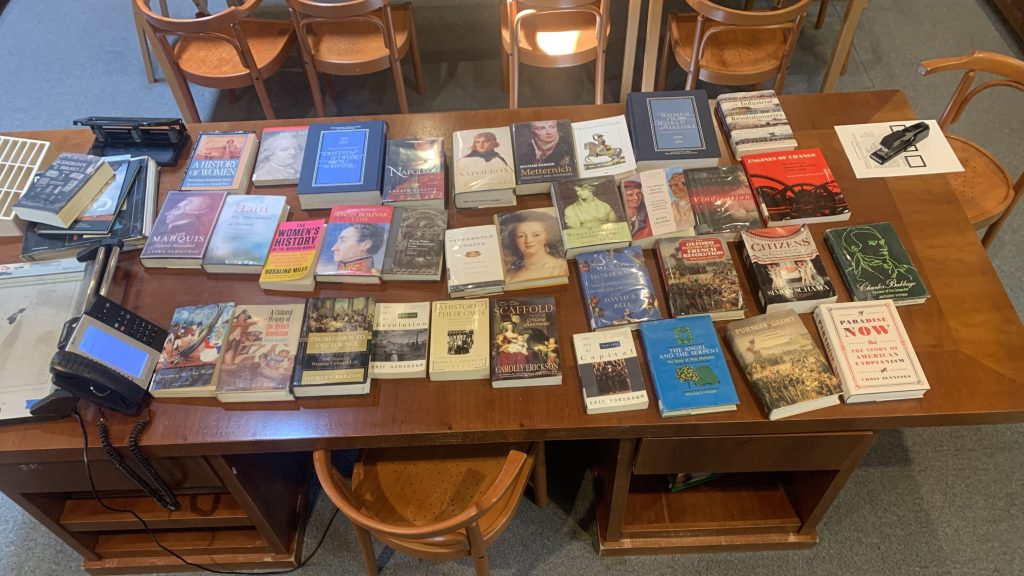
I also like to teach introductory research skills through the close reading of primary sources. Here you can find a research project in which my students conducted the secondary source research necessary to properly interpret and contextualize individually assigned primary sources from the Age of Atlantic Revolutions. Students had a choice of creating either traditional research papers or public history projects accompanied by shorter, more informal essays. While I designed the assignment for tenth graders (after they had spent most of a year learning primary source analysis skills), it could easily be adapted for college underclassmen.
I encourage other teachers to use/adapt my teaching materials. If you do so, please send me a quick email to let me know!
 Dr. Zachary Conn